


Description
Since we’re navigating the high school years together, I know exactly how it feels to hunt for that “perfect” resource—the one that’s tough enough for a 9th-grade transcript but still keeps that spark of wonder alive. I poured so much heart into this Gardening and Foraging set because, let’s be honest, our big kids need more than just the basics. I wanted something that bridged the gap between those sweet nature walks we did in elementary school and the real-deal ecological science our teens are ready for now. It’s been such a labor of love creating this with my own daughter in mind, making sure it’s rigorous and thought-provoking without losing that personal, hands-on connection to the land that makes homeschooling so special. I really hope this makes your “teacher-mom” planning a little lighter and helps your students/homeschoolers see just how amazing (and scientific!) self-sufficiency can be.
INCLUDED IN THIS RESOURCE:
- Multi-page, rigorous reading passage.
- Deep-dive paragraph-style prompts.
- Comprehensive paragraph-format guide.
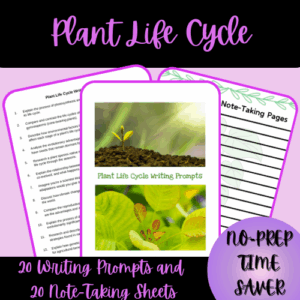
- 10 note-taking sheets for active learning.
TOPICS COVERED:
- The science of the “living community.”
- Hugelkultur, hydroponics, and soil pH.
- The “Rule of Thirds” and plant safety.
- Learning to “read the land.”
PERFECT FOR:
- Biology or Environmental Science credits.
- Practical skills and academic rigor.
- Group study on botany and ecosystems.
- Structured for student-led learning.
WHY CHOOSE THIS RESOURCE?:
- Complex vocabulary and sophisticated themes.
- Encourages a responsible worldview.
- NO-PREP, ready to print, teach, and grade instantly.
- Blends science, ethics, and life skills.
BENEFITS FOR TEACHERS/HOMESCHOOL PARENTS:
- Detailed key facilitates deep discussion.
- Defined goals for high school writing.
- Supplemental or a stand-alone unit.
- Teaches stewardship through action.
BENEFITS FOR STUDENTS/HOMESCHOOLERS:
-
Builds stamina for complex text analysis.
-
Practical plant ID and food production.
-
Moves beyond recall to synthesis.
-
Transforms “consumers” into “participants.”
I really wanted to make sure we were not just “doing school” but actually understanding the why behind it all. The core of this resource is an in-depth reading passage that digs deep into the science of soil health, exploring how microorganisms and pH levels create the foundational substrate for all life. It is been so rewarding watching my own 9th grader compare methods like traditional gardening to things like Hugelkultur—it turns a simple backyard project into a legitimate biology lab. We spend time discussing the “vibrant community” of the soil, moving beyond the idea of dirt as just a medium and looking at it as a complex living system. This level of detail ensures that your student is not just memorizing facts, but developing a sophisticated understanding of botanical physiology that looks great on a high school transcript. By exploring how physical drainage and organic matter accumulation affect plant growth, they gain practical scientific insights they can apply to their own garden beds immediately.
Foraging is another huge part of this, and I have emphasized the heavy responsibility that comes with it. We do not just talk about what’s edible; we look at the serious side of things, like correctly identifying “lookalikes” such as wild carrot and poison hemlock. My goal was to teach the “Rule of Thirds” so our kids learn to be disciplined stewards who leave enough for the wildlife and future growth. It is about more than just a snack in the woods; it is about respect, safety, and understanding our place within a larger ecological framework. I wanted to make sure our teens understand that identifying a plant is a high-stakes skill, requiring the same precision they would use in a chemistry lab or a math theorem. By focusing on the morphological differences between species, this High School Gardening and Foraging Reading Passage resource builds the sharp observational skills necessary for any advanced field of study. We dive into the ethical discipline required to harvest wild species without disrupting the reproductive cycles that keep those populations healthy for years to come.
To keep things organized (because high schoolers definitely need that!), I have included ten note-taking sheets. These are great for helping them track “ecological literacy” concepts, from seed saving to how Indigenous practices have shaped what we know today. The questions aren’t just “fill in the blank”—they require full-paragraph answers that force them to really synthesize what they’ve read and express complex ideas clearly. These sheets serve as a bridge, taking the abstract concepts from the reading passage and giving students/homeschoolers a place to document their own findings and research. As a resource creator, I know how important it is for students/homeschoolers to have a structured way to capture their thoughts, especially when dealing with multifaceted topics like citizen science and genetic trajectory. These organizers help them map out the interconnections between species, making the “web of life” something they can visualize and master. Plus, having these completed sheets provides excellent portfolio evidence of their work throughout the school year.
When our kids get their hands dirty and finally learn the names of the plants in their own neighborhood, they stop being passive observers. They start to see their own “personal stake” in the health of the planet, which is such a vital shift during these teen years. It is so powerful to watch a 14 or 15-year-old realize that their own sustenance is directly tied to the vitality of the local ecosystem. This High School Gardening and Foraging Reading Passage resource is designed to foster that sense of responsibility, moving them toward a future where they live in a more harmonious, symbiotic relationship with the natural world. Thank you for letting me share a piece of our homeschool with yours and for trusting me to help you navigate these high school science requirements. I am always here if you have questions, and I would love to hear how your family uses these pages to connect with the natural world and build those essential self-sufficiency skills! Whether you are using this as a stand-alone unit or a supplement to your core biology curriculum, I hope it sparks many meaningful conversations around your dinner table. Happy gardening and happy homeschooling!
If you and your students/homeschoolers enjoyed this resource, please leave a review.
Thank you for your support!
Tina – Big Easy Homeschooling Mom
Please subscribe: http://tidewindacademyhomeschool.com
Social Media: https://linktr.ee/bigeasyhomeschoolingmom
Please note: All resources are digital products and nothing physical will be sent to your home.
© Big Easy Homeschooling Mom, 2024 to present. All rights reserved. This resource is for personal classroom/homeschool use only by the original purchasing teacher/homeschool parent. It may not be distributed, shared, or used by others. Additional licenses are required for multiple users or classrooms/homeschools.
Submit your review | |













Reviews
There are no reviews yet.